A First Visit to a Rural Craft Fair
A first visit to a rural craft fair feels easier when you choose one craft to explore, leave time for maker conversations, and browse without a buying list.
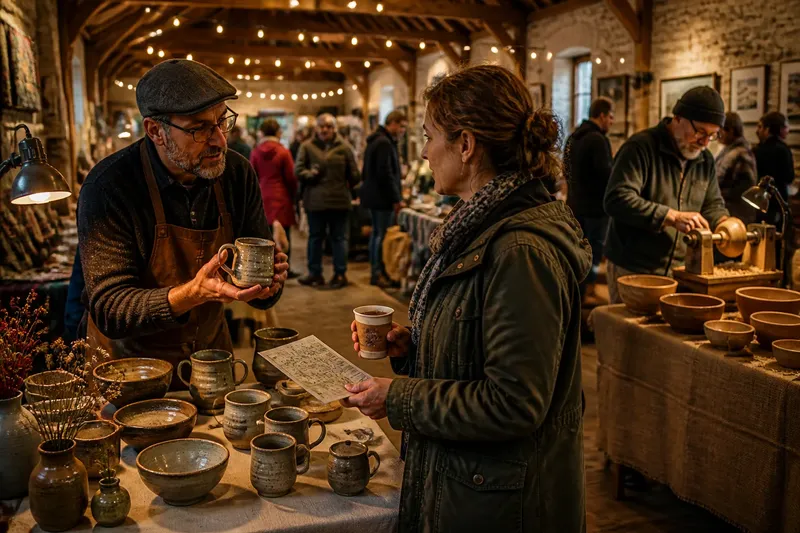
You arrive at the village hall with a paper cup of tea in one hand and the fair’s hand-lettered map in the other. A potter is explaining the curve of a mug; nearby, someone turns a small wooden bowl beneath the lights. A first visit to a rural craft fair feels easier when you choose one craft to explore and let the rest of the day unfold around it.
Choose a thread, not a shopping mission
Before you set off, decide which kind of making you would most like to notice. It could be weaving, pottery, woodwork, basketry, printmaking, or something you have never watched being made. This is a point of curiosity, not a promise to buy anything.
A single craft gives your attention somewhere to land. You might notice how one basket maker handles willow, then compare that with the shape and finish of baskets at another stall. Even when the objects differ, your eye begins to pick up choices in material, texture, and form.
Keep your interest broad enough to leave room for surprise. If you are drawn to pottery, you can still pause at a table of carved spoons or hand-printed cards. The point is to give yourself a starting thread, not to turn the fair into a task.
Choose one craft you would be happy to talk about, even if you leave empty-handed.
Give the first round time to settle
When you enter, take a slow first circuit without deciding what to buy. Notice where the stalls are, which makers are demonstrating, and where people naturally pause. In a compact hall, this may take only a little while; at an outdoor fair spread across a green or farmyard, the layout may ask for more wandering.
That first look helps you avoid spending all your attention at the entrance. A bright display or a familiar material can be tempting, but another stall may offer a demonstration or a conversation that makes the craft you chose easier to understand.
If the fair has a printed program, use it as a loose aid rather than a timetable to obey. You can circle a demonstration that interests you, then arrive when it suits your pace. Leave breathing room between scheduled activities so a good conversation does not feel like something you have to cut short.
Ask makers about the choices behind the object
Most makers are used to questions from curious visitors, though they may be busy serving someone or finishing a demonstration. A simple opening works well: “What part of this piece do you most enjoy making?” You can also ask how a material changes the finished object, what makes a pattern difficult, or how the maker decides when a piece is complete.
Questions about process often lead to more useful conversations than asking only how long something took. A woodworker might point out how grain affects a bowl’s shape; a spinner might explain why one fleece produces a different feel from another. Listen for the detail that helps you see the object differently.
Let the maker set the pace. If they are talking with another visitor, browse quietly. If they are demonstrating, stand where you can see without blocking the table, and ask before handling tools or unfinished work.
Say you are curious about weaving but do not know the names of the tools. You could ask a weaver what the crossed threads are doing; the maker might point to the loom and explain how tension shapes the cloth. You leave with a clearer sense of the craft, whether or not you choose to take home a scarf.
Browse with your hands and eyes in mind
Not every stall invites the same kind of browsing. Some objects are sturdy and meant to be handled; others have delicate finishes, sharp edges, or a sign asking visitors not to touch. Look for a maker’s cue, and ask before picking something up if you are unsure.
When handling is welcome, notice the weight, balance, surface, and small variations. A set of handmade bowls may share a shape without being identical. Those differences can be part of the maker’s choices, rather than flaws that need to be sorted into a perfect match.
Take care with bags, coats, and hot drinks in crowded aisles. A shoulder bag can brush a display without you noticing, so pause before turning or stepping back. At outdoor stalls, wind and uneven ground may also affect how comfortably you can browse; keep loose paper and cups secure.
Plan your visit around the kind of browsing you want
A simple plan gives you room to see the fair without turning the visit into a route to complete. Check the advertised opening hours and any demonstration schedule before leaving, then decide whether you want a quieter look, a particular demonstration, or an unhurried afternoon wander. Keep the first circuit flexible: if a conversation is underway or a stall is crowded, move on and return later.
For instance, imagine you have the fair’s program, a rain jacket, and a small amount of cash, and you hope to watch a pottery demonstration without spending the whole visit indoors. You check the listed hours and see the demonstration falls later in the day. You arrive with enough time for a first circuit, keep the jacket handy in case you walk between outdoor stalls, and save the pottery table for the scheduled session. If the demonstration is delayed or the area is crowded, you browse another stall and come back when there is room to see; the tradeoff is a less rigid schedule in exchange for a calmer visit.
What should you know before you go?
Should you arrive early or later?
Arriving near opening can give you more room to look before the busiest spell, while a later visit may suit a relaxed afternoon wander. Check the fair’s advertised hours and demonstration schedule, then choose the time that fits the kind of visit you want.
How should you handle payment?
Bring a payment option that suits the event, since individual makers may accept different methods. If you would rather browse than buy, decide that in advance and let price labels remain information rather than pressure.
What should you wear to an outdoor craft fair?
Choose comfortable shoes and clothing suited to the forecast and the site, especially if stalls are on grass or gravel. A light layer can make it easier to stay and watch a demonstration when the weather shifts.
Is it all right to take photographs?
Ask before photographing a maker, a work in progress, or a detailed design, and respect a no. A quick question is friendlier than assuming a public stall means every image is welcome.
Let a conversation change your plan
A relaxed visit does not require you to cover every stall. You may find that the craft you chose leads you toward a related material: a basket maker’s willow could catch your eye after you have watched a woodworker shape a handle. Follow that interest if it feels worthwhile, or return to your original thread.
If you do want to buy something, pause to consider where it will live and how you might use or care for it. You can ask the maker about cleaning, storage, or whether a piece is intended for everyday use. For an item with specific care needs, follow the maker’s advice and any accompanying instructions.
It is also fine to leave a stall, make another circuit, and come back. That gives you a little space to decide without turning the visit into a hunt for the “right” purchase. If you leave with a new question about how something is made, the fair has already given you something to carry home.
For a first visit to a rural craft fair, keep one craft in mind, allow makers room to talk, and leave gaps in your plan. You will notice more when you are not rushing to finish a route, and you can end the afternoon with a favorite conversation, a new idea, or simply the pleasure of having looked closely. Before you leave, glance back at the map and make a note of the stall you would like to revisit; it gives your next visit a starting point without making this one feel unfinished.